Even as the CEO and co-founder of Claimable, Dr. Warris Bokhari still battles with insurance companies to cover his prescribed care.
“Chronic disease patients are likely to suffer a denial or restriction in access to care,” said Bokhari. “I’m asthmatic myself. I was actually at the pharmacy yesterday and got denied for my inhaler, which is incredible.”
According to Claimable, 850 million health insurance claims are denied each year in the U.S. Plus, there’s legal action against some major insurers for reportedly using artificial intelligence to deny massive amounts of claims. In the case of Cigna, Clarkson Law Firm accuses the company of rejecting claims in less than two seconds.
On Wednesday’s “Closer Look with Rose Scott,” Bokhari said insurers who use AI to deny claims are “highly error-prone.”
“There was a case against UnitedHealth that actually showed that the accuracy rate in their Medicare Advantage claims and their denials is actually not very high,” he said.
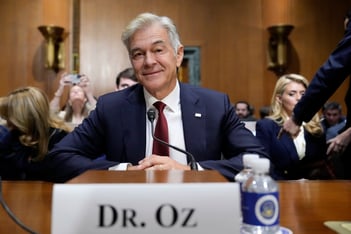
Bokhari also warned about an AI-powered program from the federal government, called WISeR. CMS Administrator Dr. Mehmet Oz says it will “help root out waste in Original Medicare.” Bokhari says it will give AI prior authorization power before a patient on Medicare receives treatment.
Officials with Claimable say at-risk minorities and low-income communities face significantly higher denial rates. Despite the high number of denied claims, only 1% of patients appeal.
“Out of the 850 million denials, less than a million appeals a year are filed, which is incredibly hard and arduous for a patient to actually go about appealing their own denial,” said Bokhari. “This is intentional, and it is entirely designed to make people feel hopeless and give up and progressively isolated.”
After three years of development, Claimable was launched in 2024 to help patients appeal their denied insurance claims.
“What we’re doing is putting AI on the side of patients to help them actually write those appeals much faster, much more efficiently, and using the correct information,” said Bokhari.
At a cost of $50, Claimable produces a professional appeal letter – using medical and legal arguments. Bokhari says they have a 75% success rate. They cover many chronic illnesses and common medications and hope to expand their service in the coming months to help cancer patients.
On PBS, Indiana University law professor Jennifer Oliva critiqued tools like Claimable, saying we’re getting into an “AI arms race where, as consumers become more savvy and are more empowered by these tools to fight back, the insurers will just up the ante on their side with the AI used to combat the insurance companies.”
“I think insurers were using AI to assail patients to begin with,” Bokhari responded. “So if the response to that is that we should do nothing to actually put any tools on the side of a patient, then I would dispute it. The other thing is that the insurers are obligated to use a specialty-matched human to review these appeals. So, if anything, what we’re trying to say is that it’s AI on the side of the patients, a human on the side of the insurers. And we’re actually inverting the leverage because these denials are distributed by AI to begin with, but the appeals critically have to be reviewed by a human.”