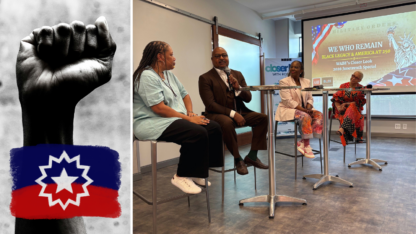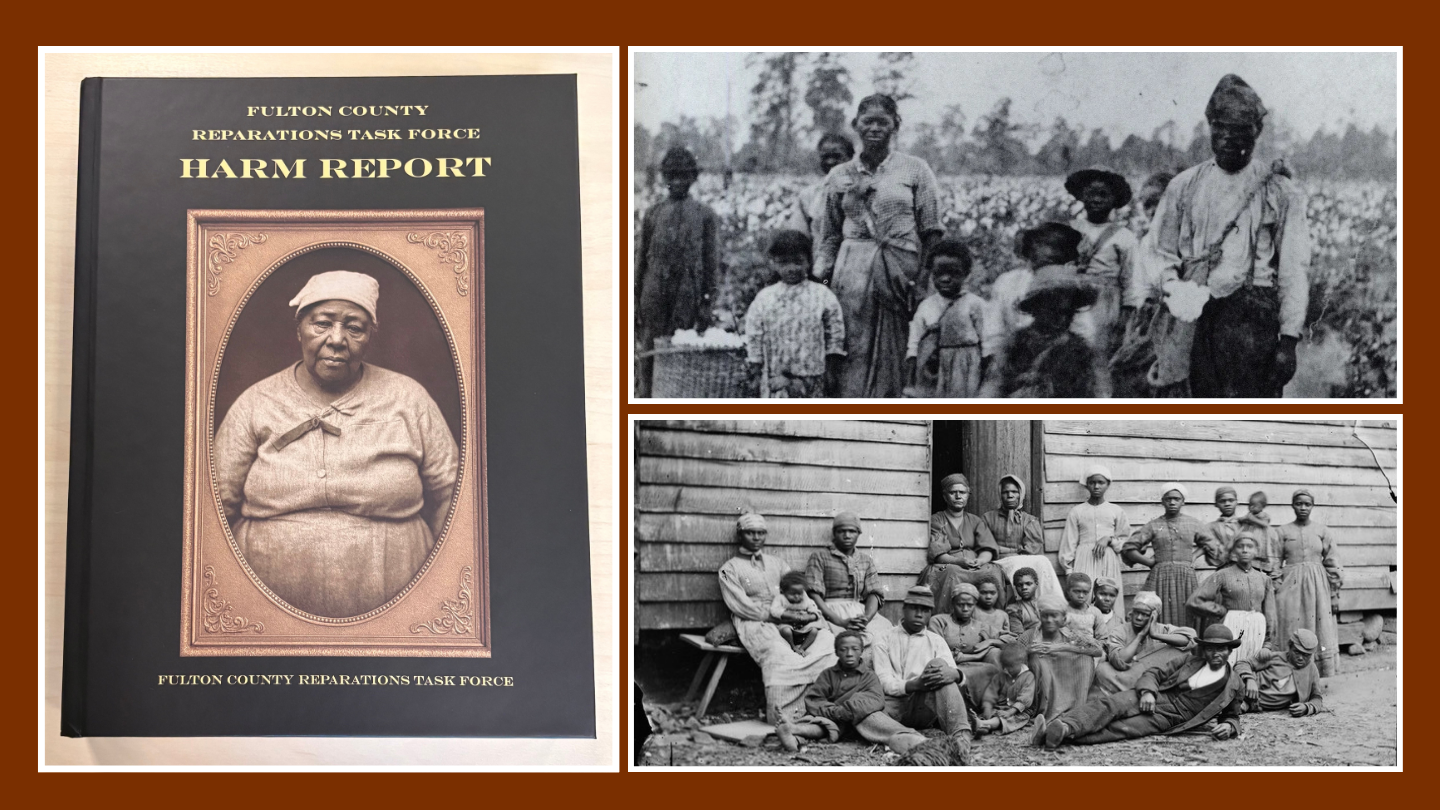
After two years of research, the Fulton County Reparations Task Force Harm Report is now public. The findings center on harms the county was responsible for during the enslavement period from 1854 to 1864, as well as the systems that continued to inflict harm long after slavery ended.
In the final installment of this two-day series, task force chair Dr. Karcheik Sims‑Alvarado, research scientist and secretary Dr. Amanda Meng, journalist and lynching historian Ann Hill Bond, and researcher John Wright detail the county’s role in the aftermath of the 1906 Atlanta Race Massacre, the rise of the Ku Klux Klan, discriminatory property taxation, and the extraction of unpaid labor through convict leasing and labor camps.
All four guests returned to “Closer Look” to continue discussing the report with host Rose Scott and WABE reporter DorMiya Vance, who has been covering the task force.
Wright notes that the Ku Klux Klan included state lawmakers, judges, police, and members of the Fulton County School Board.
“The Klan was active in trying to recruit and gain members who were in government,” he said. “They were able to basically run a shadow government through the offices they controlled.”
Wright found newspaper accounts identifying KKK members and Atlanta city directory listings that documented their meeting locations and officers.
Bond connects the 1906 massacre directly to Fulton County’s inaction during a three‑night, four‑day killing spree.
“The call to action was very clear: kill Black people,” she said. “And they did that not just in Atlanta, but across the county, as far south as East Point.”
She says the violence was fueled by the growing success of Black Atlantans in terms of voting, owning property, building businesses, and establishing the HBCU center anchored by Morehouse, Spelman, and Atlanta University. White fears of “losing power” drove a push for disenfranchisement, intensified by the 1906 governor’s race. Candidates Hoke Smith and Clark Howell used their newspapers to publish fabricated stories about Black men attacking white women, helping ignite the violence and leading the way as voters elected a governor who ran on the disenfranchisement of Black Georgians.
Sims‑Alvarado points to the staggering economic disparities that followed. In 1933, during the Great Depression, Black Fulton County residents “carried a tax burden of 22,377% and owned just .0067% of all available land in the state — and they paid it.”
The report also documents 63 county‑run convict labor camps. Meng explains the scale of stolen labor: “This is very much about white political power and maintaining it.” Using a 7% compound interest rate from roughly 1859 to 1959, she calculates that unpaid wages from the chain gang alone amount to $57.6 billion.
The task force’s next phase focuses on repair and members agree it must begin with a full public acknowledgment of the harms.