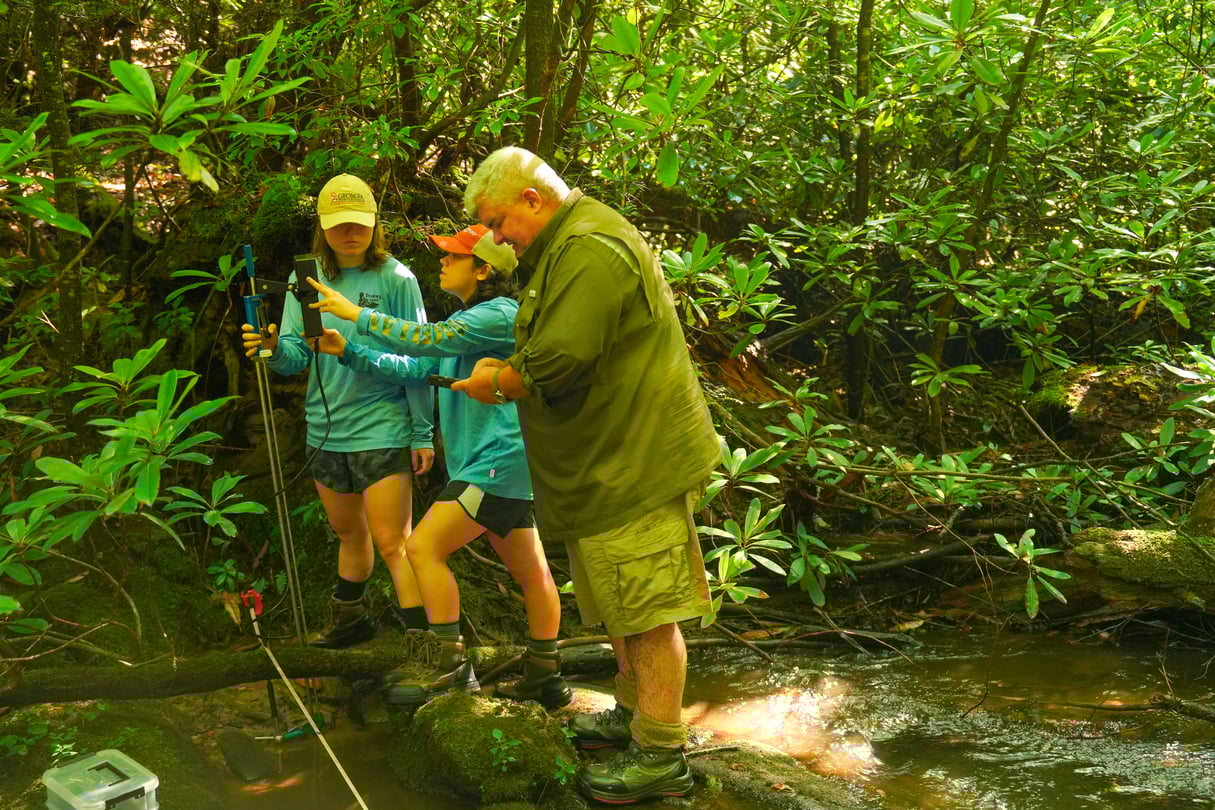
In a shallow, shady, pebbly stream in North Georgia, Thomas Floyd trudges through waist-deep water.
He reaches the middle of the stream and begins yanking a black milk crate out of the silt.
“There are eight milk crates in this entire study. And within each milk crate, there are about 190 hooks,” he said.
Read this story now for free
To continue reading, sign up for our newsletter and get unlimited access to WABE.org
You can select your preferences for news and local content. We will never share your email address. Learn how your newsletter sign-up will support WABE and Public Media