
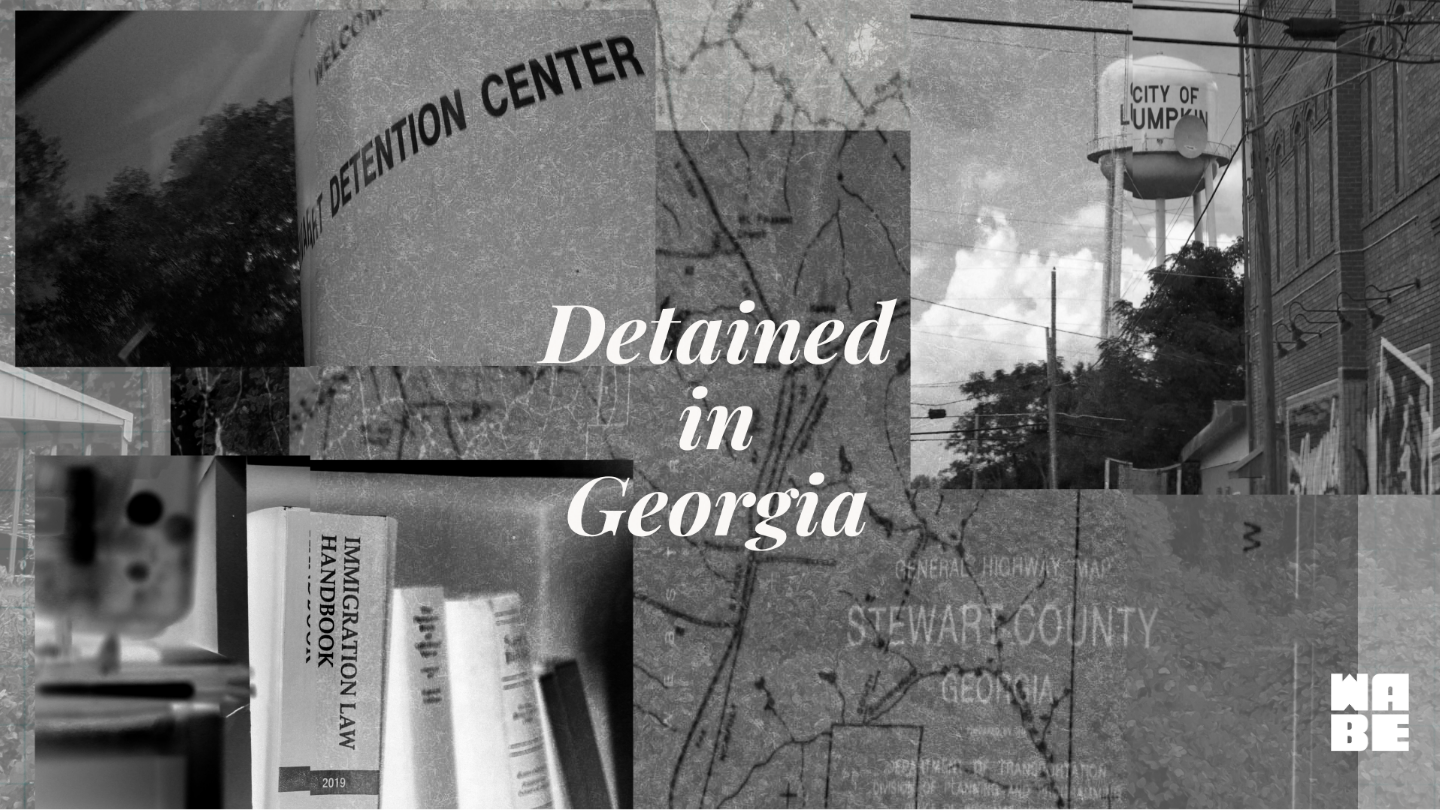
Immigration and Customs Enforcement (ICE) detains thousands of immigrants across Georgia, mostly in rural areas. The numbers are climbing during the second Trump Administration.
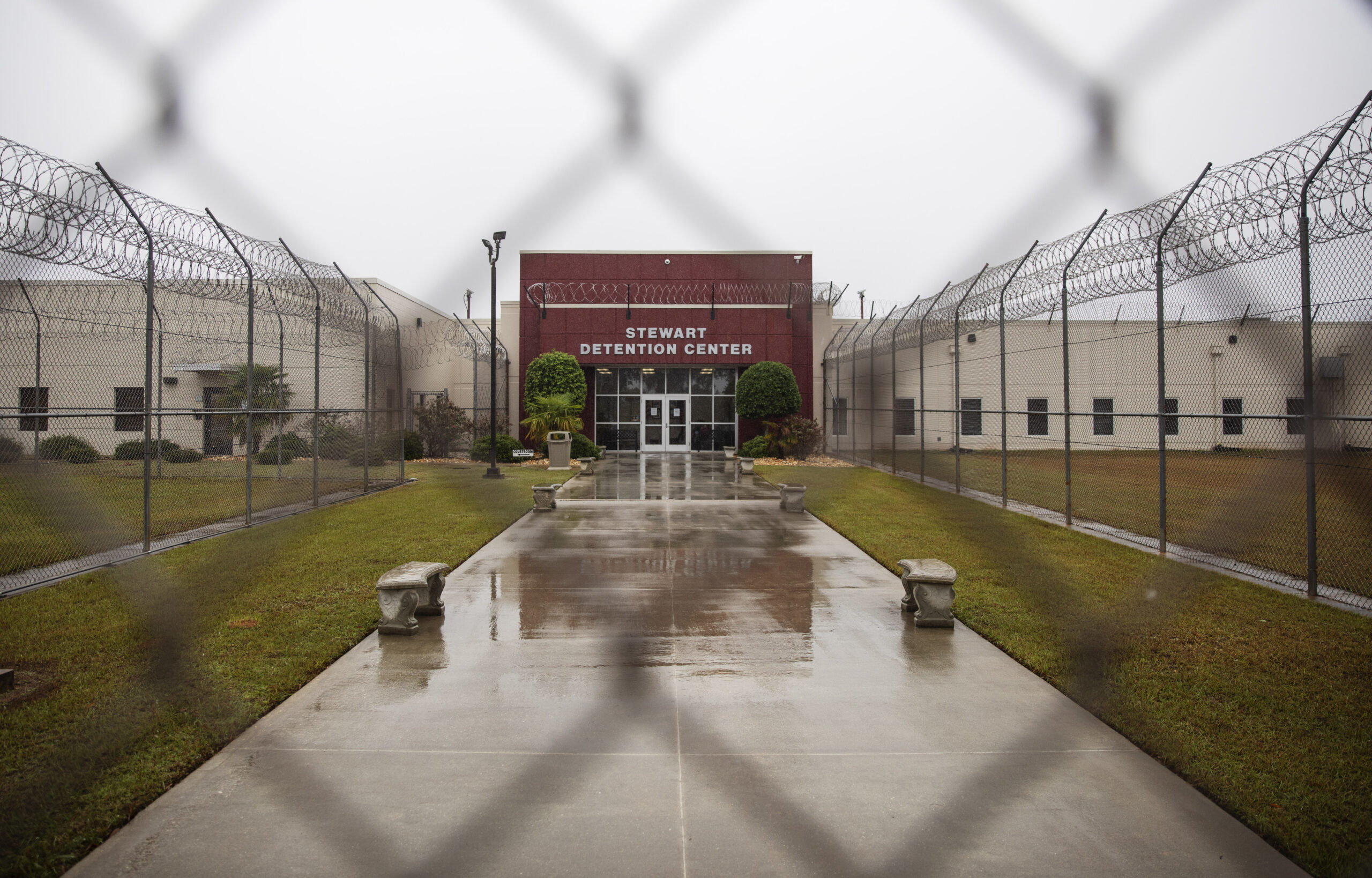
WABE spent time in Stewart County, home to one of the largest immigration detention centers, to better understand what the numbers mean for the community — and for the people detained there.






Access to attorneys
For the thousands of people in immigration detention centers in Georgia, access to legal representation can be hard to come by. Immigrants are not guaranteed a lawyer in immigration court because it is a civil, not a criminal issue. A private attorney can cost thousands of dollars, and few live near Georgia’s rural immigration detention centers.
WABE’s Emily Wu Pearson spoke with pro-bono lawyers who travel to Lumpkin, Georgia to to help their clients at Stewart Detention Center navigate the system.
Economics of detention
Stewart County was one of the poorest in the country.
As of 2023, the federal government was spending at least $3.3 million a month to operate the Stewart County Detention Center there. But most of that money doesn’t stay with the county.
WABE immigration reporter Emily Wu Pearson traveled to Lumpkin, Georgia, to learn more, including the impact of the detention center on job opportunities and high school graduation rates.
The Backlog
There’s a backlog of more than 100,000 cases in immigration courts in Georgia alone, and that number increases by tens of thousands of cases each year.
Some of these court proceedings are open to the public.
Volunteers with the nonprofit Georgia Asylum and Immigration Network’s court watch program collect information about bond hearings so advocates and attorneys in the Southeast can understand whether there are trends in judges’ decisions, and whether these hearings are public.
The Helpers
Every Saturday morning, volunteers drive to a historic house in what’s left of downtown Lumpkin, a shrinking town two-and-a-half hours southwest of Atlanta. They run a hospitality house called El Refugio.
It’s where people visiting immigrants detained at nearby Stewart Detention Center can stay.
Groups like El Refugio say that visiting the detention center in person is crucial because it helps detainees know that they’re not alone, and they can help families navigate rules that feel like they’re in constant flux.
Related WABE News Stories




More Immigration Stories




Emily Wu Pearson
Immigration and Communities Reporter
Prior to WABE, I spent my time at small newspapers and various nonprofit news organizations from the Ocala Star-Banner to Honolulu Civil Beat to NPR, including some time producing podcasts in Taipei, Taiwan. I grew up on public radio, and I have tried to work for organizations where news is free and accessible to anyone. I have been recognized for my reporting, including a regional Edward R. Murrow award for hard news.
I spend most of my time with immigrants and refugees who now call Atlanta home. Sometimes, that looks like tagging along with entrepreneurs and artists bringing their life experiences to the rich fabric of the city. Other times, that looks like sitting with people who are willing to share their difficult, sometimes traumatic journeys here and the chaotic systems they face as they try to acclimate. Telling these stories in Atlanta, the city with a deep, inextricable culture of civil rights and justice, is a privilege as I see an evolution of Atlanta into a home for newcomers to the country.