This article was updated on Monday, Nov. 17, 2025, at 12:20 p.m.
On a late summer morning, all the stores in the downtown square in Lumpkin, Georgia, are closed except for two — the combination liquor-corner store, and a museum.
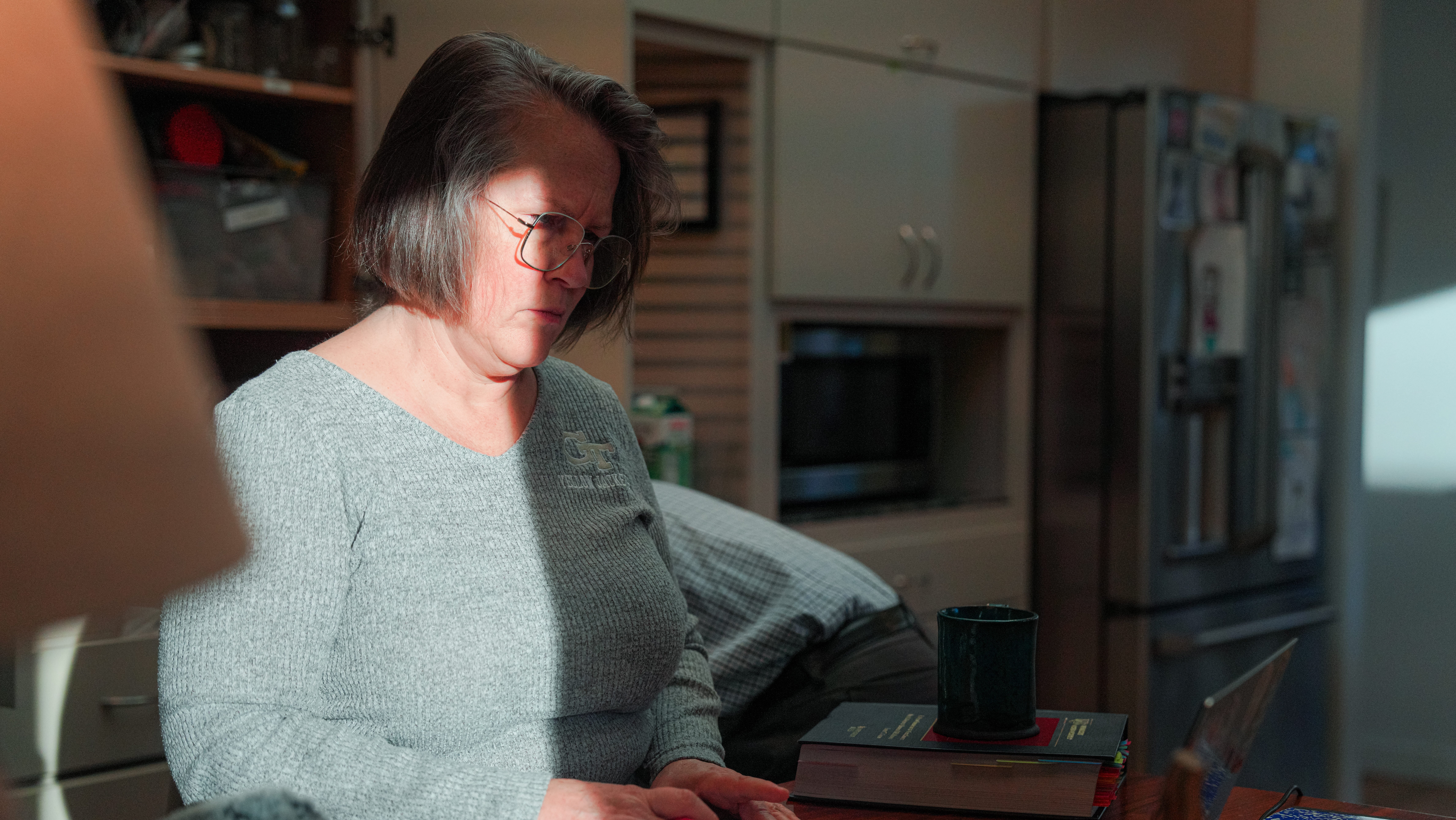
“Thirty-five years ago when my husband brought me here, every store on this square had a business in it,” said Alice Hamilton while she rocked in a wooden rocking chair in the historic Bedingfield Inn. It was a stagecoach inn that was built around 1836 and is a museum today. Hamilton works there.
She hadn’t seen another person all day.
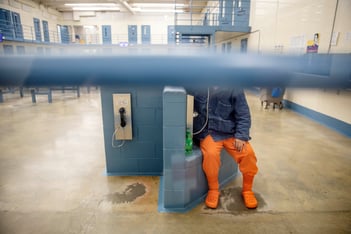
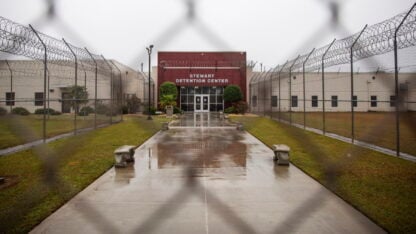
About a mile away, nearly 2,000 people were detained at Stewart Detention Center. U.S. Immigration and Customs Enforcement spends millions of dollars a year detaining immigrants there and in two other facilities in Georgia.
The majority of the millions go to the private prison companies that run the facilities, and Georgia municipalities make some money from taxes and utilities. Stewart County in the southwest part of the state is home to Georgia’s largest ICE facility.
The millions going to Stewart Detention Center hasn’t shielded the community from the realities of a declining rural economy, but it has been a consistent lifeline to the area for nearly two decades.
“That’s hurt to see the businesses fall away,” said Mac Moye, Stewart County manager. He’s a fifth generation resident.
In the 1850s, Stewart County was one of Georgia’s most populous counties. The economy ballooned after white settlers drove out Native Americans and brought enslaved people to grow cotton. But when the railroad was built, it bypassed the county and people left to follow jobs.
Now, Stewart County is one of the poorest counties in the country by median family income, according to analysis of Census data by the National Institute on Minority Health and Health Disparities.
“Stewart County’s history is mixed together with the really bad decisions that we’ve made over the years with slavery and Indian removal and now, you know, the history of American immigration,” he said.
Private prison company CoreCivic runs the ICE facility just outside of Lumpkin.
The drive between town and the detention center is dappled with empty houses, closed businesses and trees overgrown with kudzu, the vines softening the branches of trees into soft giants off the road.
As of 2023 the federal government was spending at least $3.3 million a month to operate the detention center, according to a Department of Homeland Security report.
WABE reviewed Stewart County’s year-end financial reports and found in recent years, the county government received around $600,000 a year on average from the facility in fees. Ryan Gustin, a spokesman for CoreCivic, said the facility pays about $2.2 million in utilities as well.
Moye said that’s not nothing.
“The way the [county] commission views it is that we have two ambulances at any given moment in the day whereas the other counties around here just have one running,” he said.
Stewart County does not have a hospital. Moye said the closest hospital to Lumpkin is in Eufaula, Alabama, 25 miles away.
Moye said the detention center also made a difference in high school graduation rates.
CoreCivic requires a high school diploma or GED to work at the facility. Moye said before the chance at a job at the detention center, the county’s high school graduation rate was around 47%.
“People were able to come straight out of high school into a job, the first time ever that that was possible in this county,” he said.
But Moye said there’s an irony in that. The better educated graduates go to bigger cities to work where there’s affordable apartments and better paying jobs.
Gustin, with CoreCivic, said in a statement the company strives to be a positive member of the community and provide meaningful career opportunities for those who choose to work there.
Moye said the detention center can employ hundreds of people, but by his count only about 90 employees live in Stewart County.
“I think the single biggest issue is housing, and that is a problem that we Stewart Countians have to deal with,” he said.
The county applied for a grant with the Georgia Department of Community Affairs to learn how rural communities like Lumpkin, the county seat, can address the lack of housing. Census numbers show fewer people lived in Lumpkin in 2020 than in 2000.
“Just my intuition and all my 50 years worth of working in this county, I know that if we had modern housing for people to live in, we would get more people from CoreCivic living in this county,” Moye said. “We would have a grocery store in Lumpkin if we had modern housing. That’s the key that turns this whole engine back on here. It’s gonna happen; we just have to keep pushing at it.”
As it is, there’s no grocery store and one doctor’s office. There’s a handful of places to eat and a Dollar General, Dollar Tree and Family Dollar.
“That’s your lot in life if you live in a real small town,” said Alice Hamilton, from the museum.
She said she leaves town to do normal tasks. Her doctor is about 40 miles away in Americus. The grocery store is 10 miles down the road in Richland. She gets her hair cut about 30 miles away in Plains. That’s where the vet and groomer is, too.
“A lot of people would like to live here that work at the detention center but there isn’t any place for rent here,” she said. “I could rent my house 500 times over. People are always asking me.”
But then she wouldn’t have anywhere to live in the shrinking town of Lumpkin, either.
Correction: A previous version of this article incorrectly stated the number of doctor’s offices that exist in Lumpkin. It has been corrected.
This is part one of the WABE News series “Detained in Georgia,” where we look at one of the largest immigration detention centers in the U.S. to better understand how it affects the community — and the people detained there.