This coverage is made possible through a partnership with WABE and Grist, a nonprofit, independent media organization dedicated to telling stories of climate solutions and a just future.
Early one morning in June, sporting bug spray and waterproof shoes, a research team waded out into a marsh about halfway between Savannah and Brunswick, on the edge of Blackbeard Creek. They didn’t have far to walk, but it was tough going. When the thick mud gets hold of something — like a foot — it doesn’t let go easily. Everyone sank in at some point, often past their knees.
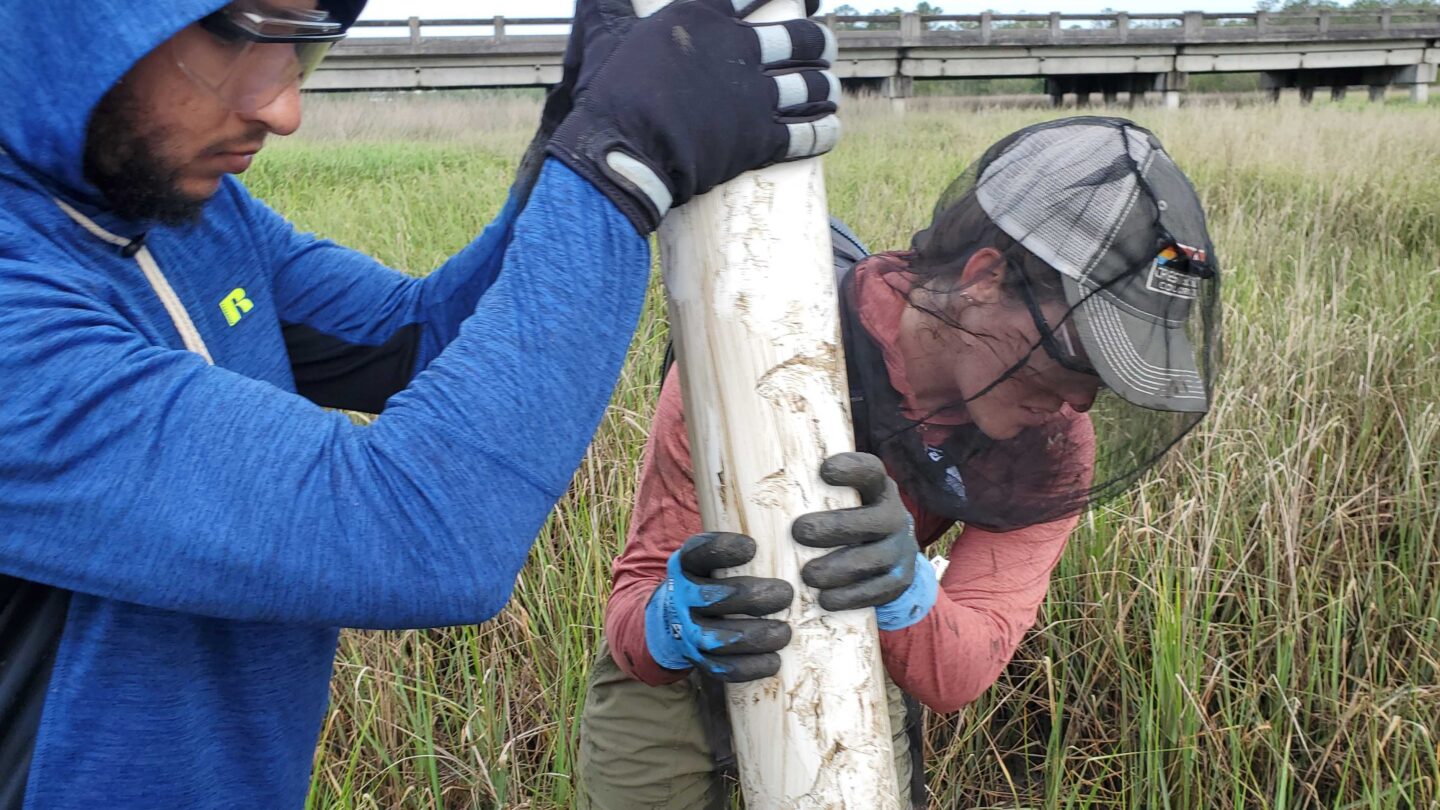
The team navigated the deep muck so they could take samples of it with a big piece of PVC pipe. They pushed it into the mud, capped it to create a vacuum seal, then — battling the grip of the mud again — hauled it out again, collecting what’s called a core sample.
Read this story now for free
To continue reading, sign up for our newsletter and get unlimited access to WABE.org
You can select your preferences for news and local content. We will never share your email address. Learn how your newsletter sign-up will support WABE and Public Media