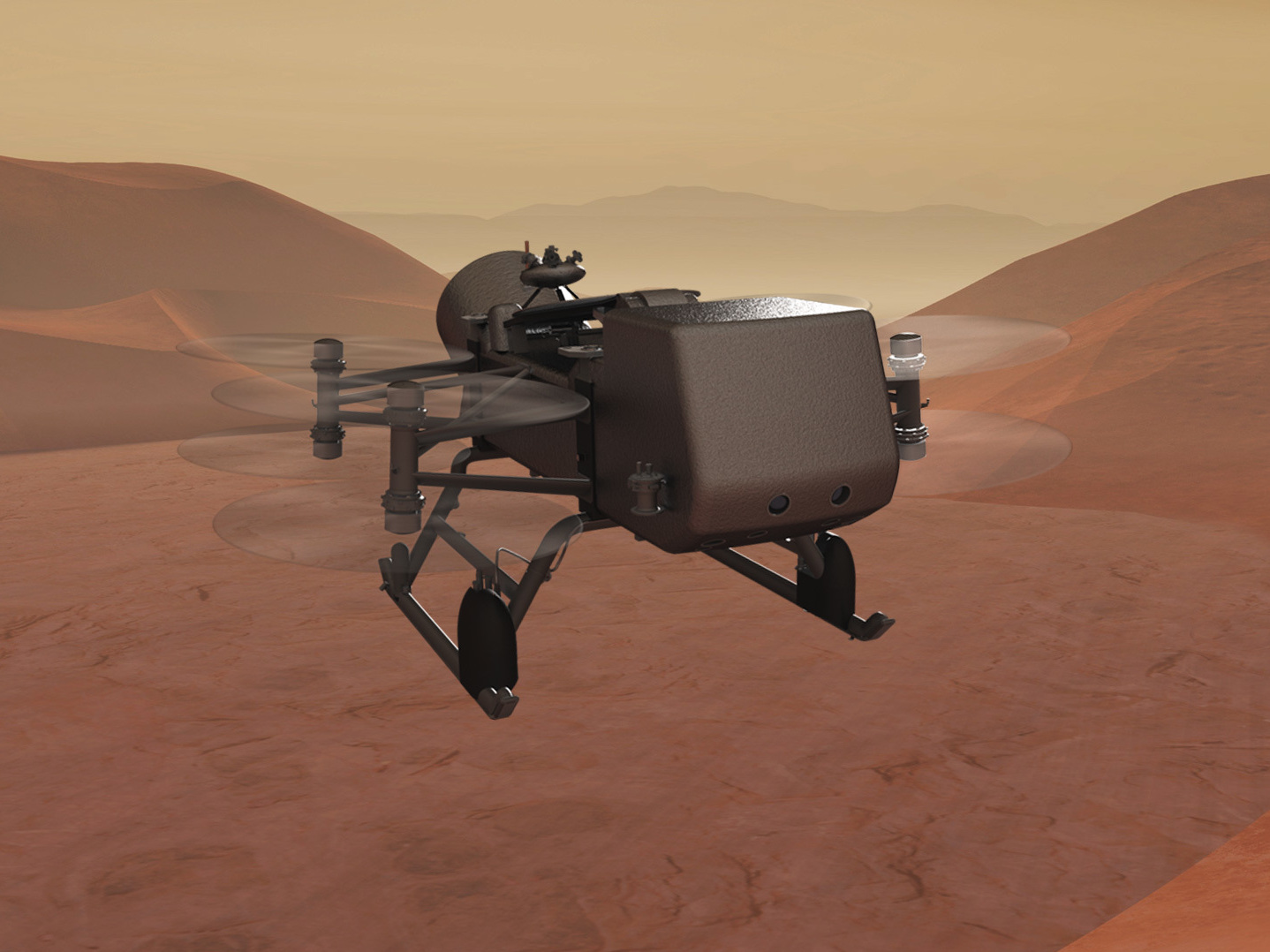
On the face of it, NASA’s newest probe sounds incredible. Known as Dragonfly, it is a dual-rotor quadcopter (technically an octocopter, even more technically an X8 octocopter); it’s roughly the size of a compact car; it’s completely autonomous; it’s nuclear powered; and it will hover above the surface of Saturn’s moon Titan.
But Elizabeth Turtle, the mission’s principle investigator at the Johns Hopkins Applied Physics Laboratory, insists that this is actually a pretty tame space probe, as these things go.
“There’s not a lot of new technology,” she says.
Read this story now for free
To continue reading, sign up for our newsletter and get unlimited access to WABE.org
You can select your preferences for news and local content. We will never share your email address. Learn how your newsletter sign-up will support WABE and Public Media