On an early weekday morning in Atlanta, Lauren Waits navigated a Department of Justice website to find the link to immigration court.
Kids bustled in the neighborhood outside to get on the school bus on time. The Georgia Tech whistle blew in the distance. Her dogs Chicka and Novio clacked around the kitchen as she settled in with her first cup of coffee for the morning to watch immigration judge James Ward hear bond cases at the Stewart Immigration Court in rural Lumpkin, Georgia, hundreds of miles away.
Waits is a volunteer court watcher for the Georgia Asylum and Immigration Network.
“These hearings are public. The public should be in them,” said Adriana Heffley, the legal director at GAIN. “They should be aware of how the immigration system is functioning.”

GAIN launched a court watch program for Georgia immigration courts last year to get a better understanding of how judges decide which immigrants can be released from detention on bond. The nonprofit shares this data with attorneys in the Southeast.
Heffley said the information helps because rules have changed quickly in the last year.
“ICE started arguing that all people who entered the U.S. unlawfully are ineligible for bond,” said Alizeh Sheikh, the Equal Justice Works fellow at GAIN who launched the program. “It turned out at Stewart there were two judges who agreed with ICE and two completely disagreed. Some people would be getting bond, but then for the other two, if you happened to request a bond and get assigned that judge, you were kind of out of luck.”
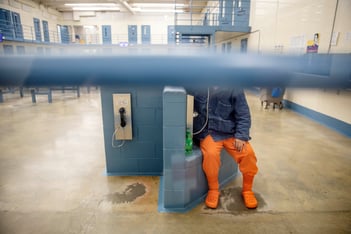
Bond hearings are one of a few types of immigration hearings open to the public. Immigration courts across the country face a historic backlog of proceedings, including bond hearings, with more than three million cases pending nationwide.
As of August 2025, data obtained by the nonprofit Transactional Records Access Clearinghouse showed Georgia’s immigration courts had 131,723 pending cases in the backlog. That number climbs by the tens of thousands every year in Georgia alone.
Heffley said if more people in the public are aware of what happens in immigration court, it could help battle some of the misinformation about the U.S. immigration system.
“There’s this myth that it’s really easy to win asylum,” she said. “We know here in Georgia as immigration attorneys that that is the furthest thing from the truth.”
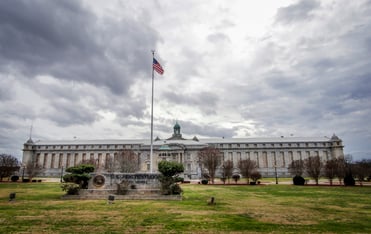
Judges at Stewart Immigration Court, which is attached to Stewart Detention Center, historically have had some of the lowest asylum grant rates in the country, according to data from TRAC.
Immigration judges are appointed by the U.S. Attorney General, and even though the Trump administration is increasing deportation goals, it’s firing judges at an unusual rate. Unlike immigration enforcement and detention, the immigration court system isn’t getting billion dollar infusions from the Trump administration.
“Being able to witness what is happening and counter some of the misinformation or maybe releasing some previously held beliefs that were not entirely accurate are all things that can happen if the public observes what’s happening in immigration court,” Heffley said.
Judge Ward heard two bond cases while volunteer Lauren Waits observed. Both hearings were for men, and both men had attorneys.
“This is not a statistical sample, but I don’t think I’ve ever seen anybody who represented him or herself get bond,” she said.
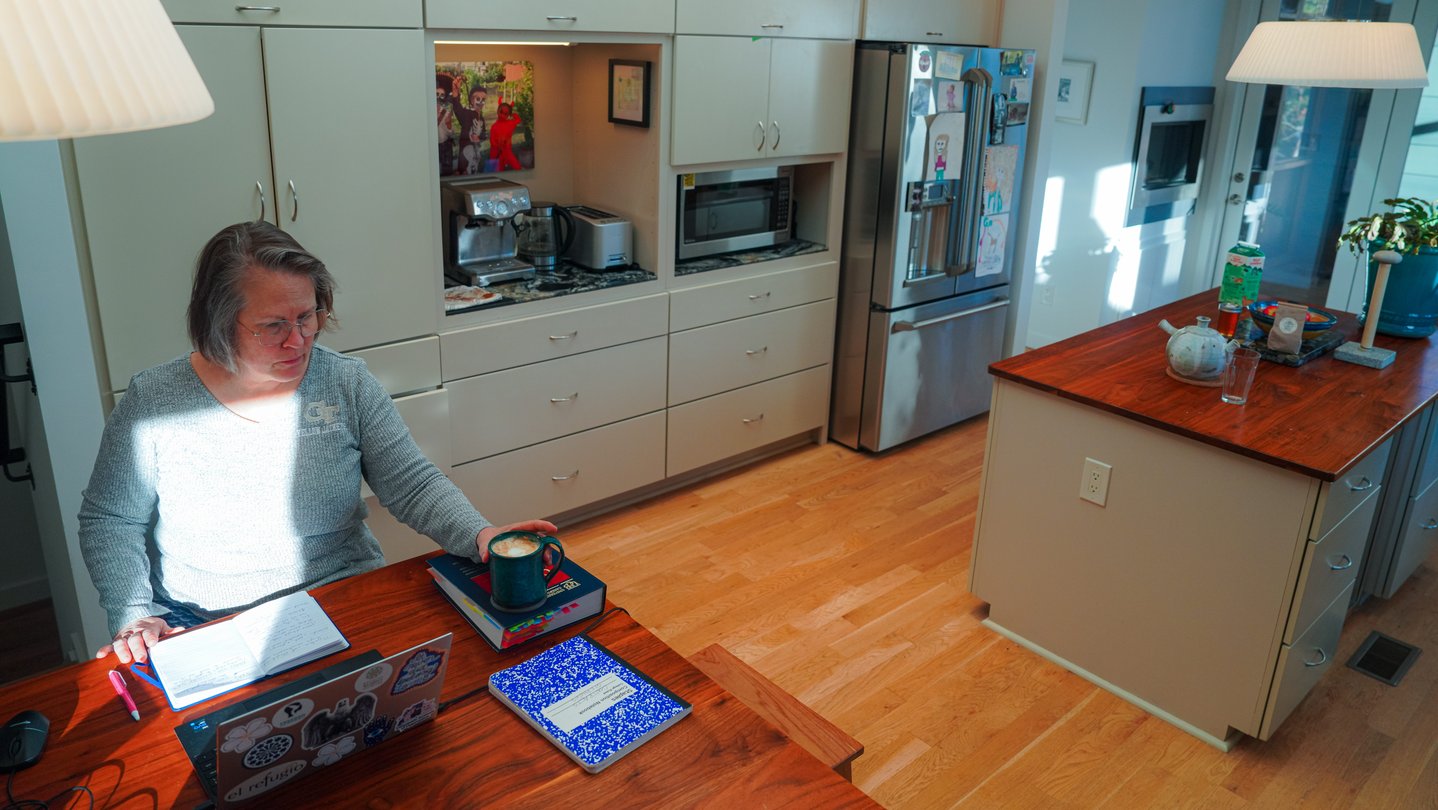
Waits took detailed hand-written notes to later type into a Google form for GAIN.
The first hearing was for a man who lived in the U.S. for more than 20 years. His attorney said he had deep community roots, including a job and U.S. citizen children.
But Judge Ward raised concerns because the man had made no effort to obtain legal status in the country.
The attorney asked for the man to be released on a $3,000 bond.
“His attorney provided a whole lot of letters, including from the church, the coworkers, and a state rep, Rep. Carpenter,” said Waits, referring to Republican Georgia state Rep. Kasey Carpenter. The man in detention lived in Dalton, in Carpenter’s district.
The judge granted the man bond at $5,000, and the Department of Homeland Security attorney reserved the right to appeal. The judge set the appeal deadline for December.
The attorney confirmed with WABE the man was able to bond out and reunite with his family. As of publication, DHS had not appealed the case.
“It’s really kind of shocking how cut off we can all be when we have the privilege of U.S. citizenship,” Waits said. “We who are citizens do not have to see this at all. I guess I get a sense of satisfaction, as tedious as it may be, to drive down to Lumpkin, to go to these places, or to use this window that very few people know about into the courts to just say, we’re not going to disappear people in our society.”
Note of disclosure: Lauren Waits worked at WABE from January to June 2015.
This is part four of the WABE News series “Detained in Georgia,” where we look at one of the largest immigration detention centers in the U.S. to better understand how it affects the community — and the people detained there.