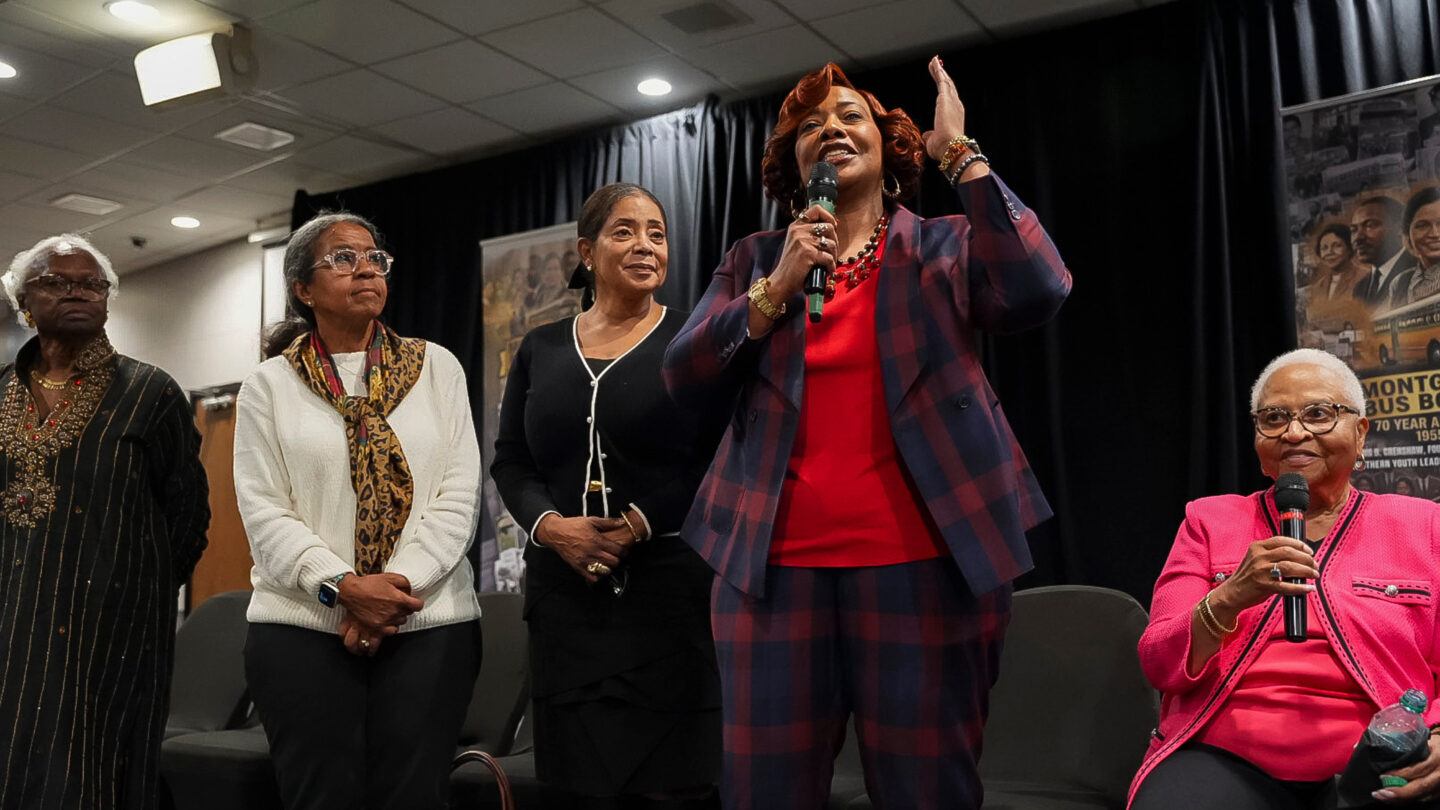
Doris Crenshaw was 12 years old on Dec. 5, 1955, when she and her sister eagerly rushed door to door in their neighborhood, distributing flyers prepared by activists planning a boycott of city buses in Montgomery, Alabama.
“Don’t ride the bus to work, to town, to school or any place on Monday,” the flyers read, urging people to attend a mass meeting that evening.
There was a sense of urgency. Days earlier, Rosa Parks, the secretary of the local NAACP chapter, had been the latest Black person arrested for refusing to give up a bus seat to a white passenger on the segregated buses. For 381 days, an estimated 40,000 Black residents stayed off city buses — opting to walk, ride in car pools or take Black-owned cabs — until a legal challenge struck down bus-segregation laws.
Read this story now for free
To continue reading, sign up for our newsletter and get unlimited access to WABE.org
You can select your preferences for news and local content. We will never share your email address. Learn how your newsletter sign-up will support WABE and Public Media