A piece of the 1996 Olympic Tower near Georgia State University is being considered for relocation. But it’s not sitting right for the residents of the Summerhill neighborhood, where the structure has stood for 30 years as the game’s anniversary approaches.
In early June, Georgia State released an announcement for a historic park partnership that would move the top part of the Olympic Flame tower, or the Cauldron, to Centennial Olympic Park.
“While the Olympic Cauldron will find a new home in Centennial Olympic Park, the tower and iconic Olympic rings bridge will remain in Summerhill as enduring landmarks that connect Atlanta’s past, present, and future,” according to a GSU press release.
Residents said they became officially aware of the relocation announcement after state Rep. Phil Olaleye spotted the move among items in the proposed state budget. Olaleye represents District 59, where Summerhill and the Cauldron are located.
“It is worth remembering that Summerhill was Atlanta’s first neighborhood established by freed slaves. For generations, it has been a community defined by resilience, sacrifice, and pride,” Olaleye said on the House floor during the recent special legislative session.
“Yet … a small group of private interests is seeking to move that torch to Centennial Olympic Park because they believe it will receive greater visibility and investment there. Think about what that says. It says the neighborhood that hosted the world is not prominent enough, is not good enough to carry its own legacy,” he said.
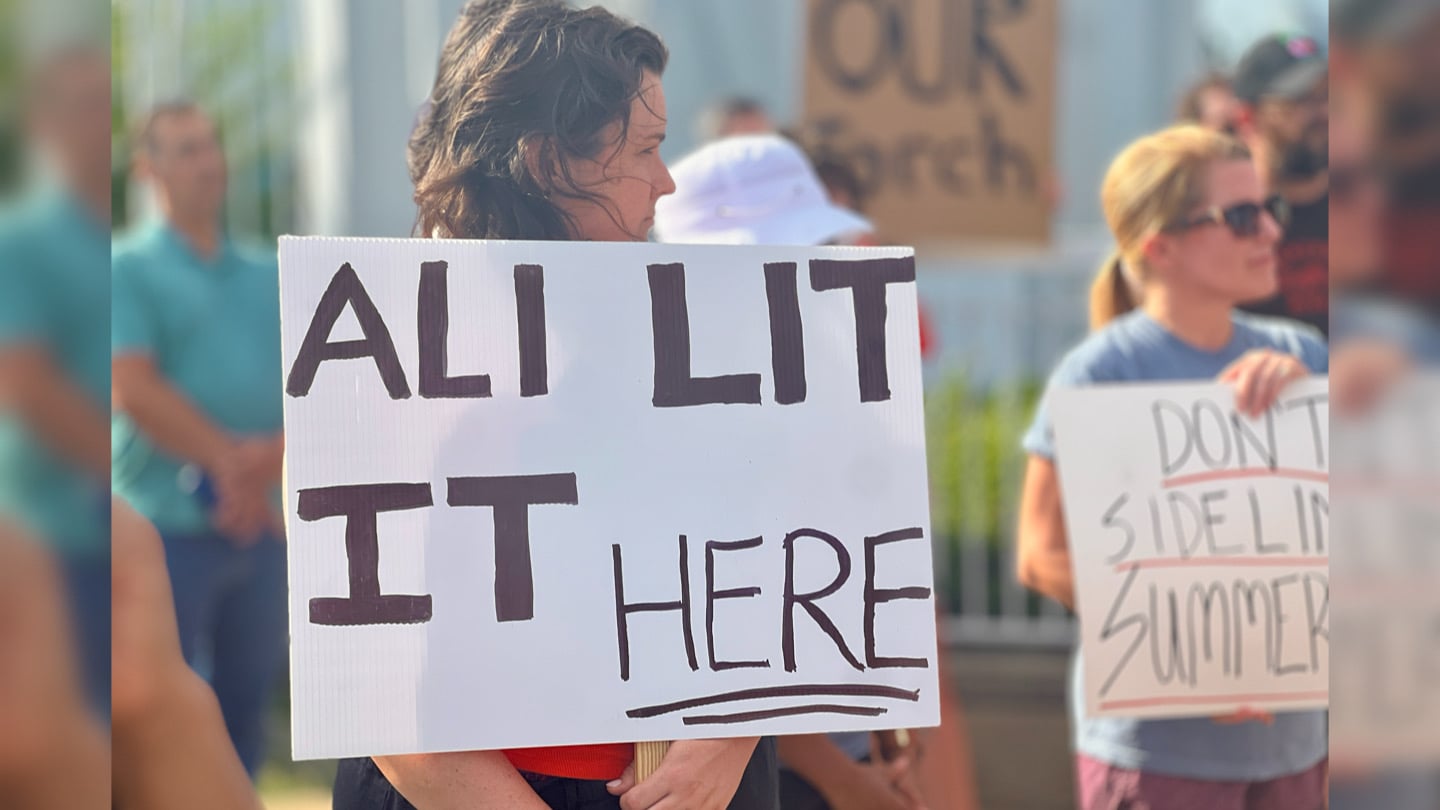
Olaleye and folks with the Organized Neighbors of Summerhill (ONS) issued a community statement on the matter, pushing to keep the Cauldron in their backyards. By Jun. 22, residents had organized a rally against the relocation.
They gathered, despite the threat of rain, at the base of the ‘96 Olympic Tower with signs and music along the street. Volunteer president of ONS John Helton organized the rally.
“We were totally blindsided,” Helton said. “I think it was really closed-door, cover-of-night kind of process that is very, I mean, on so many different levels, it’s just disrespectful.”
According to research done by ONS, Summerhill was “one of two settlements established after the Civil War by William Jennings in 1865. The area was once home to the sole public school for Black children in Atlanta.”
“As Atlanta grew to the north and west during the early part of the twentieth century, the more affluent moved to larger lots with bigger houses. The politics of Urban Renewal left Summerhill with a prevalence of dilapidated, sub-standard housing, vacant lots, and abandoned commercial buildings,” according to the ONS website.
The historical Black neighborhood would still become a staple in Atlanta’s history. The area hosted the ‘96 Olympic Games, where Mahammad Ali held the torch and lit the flame that summer.
And Geoffry Heard remembered that as he recounted his time as a volunteer during the games. He also attended the rally against the relocation of the Cauldron.
“It makes me feel like we’re being deserted again … it shows that you don’t care anything about the people in this community. This is a historic marker, and to see it moved, it really hurts because, here again, we’re going to deprive Summerhill of its history. This is where the Olympics happened, and this is where the marker should remain,” Heard said.
ONS says it’s unclear if and when they will hear from Georgia State officials on considerations to pause the Cauldron’s relocation. The group is asking for residents to be included in the decision-making process.
GSU has yet to respond to WABE’s request for comment.
As of now, officials say the relocation of the Olympic Cauldron to Centennial Olympic Park is a state-level action. However, the Atlanta City Council passed a resolution calling for a pause on the decision.