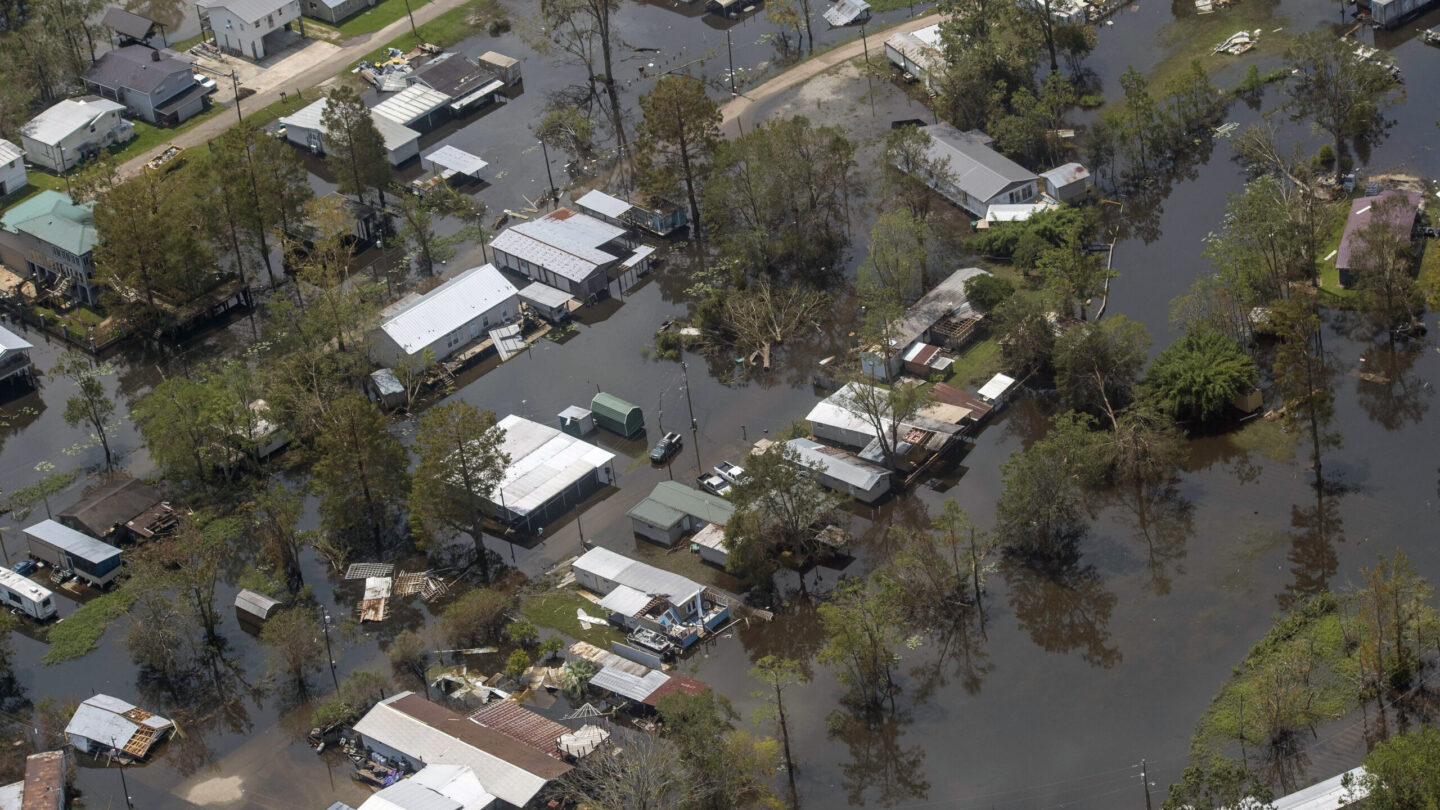
Flood risk in the United States will increase by about 25% in the next three decades, and Black communities in the South will face disproportionate harm, according to a sweeping new analysis published Monday.
Climate change is already driving more severe flooding across much of the country, especially along the East Coast and Gulf Coast where residents are experiencing the triple threat of rising seas, stronger hurricanes and heavier rain. By 2050, annual losses from floods will be approximately $40 billion, according to the new study by scientists in the U.S. and United Kingdom.
“This isn’t a pie in the sky projection,” says Oliver Wing, the chief research officer at the U.K.-based flood modeling company Fathom and an author of the study. “These risks are very likely to be experienced by people that are alive right now.”
Read this story now for free
To continue reading, sign up for our newsletter and get unlimited access to WABE.org
You can select your preferences for news and local content. We will never share your email address. Learn how your newsletter sign-up will support WABE and Public Media