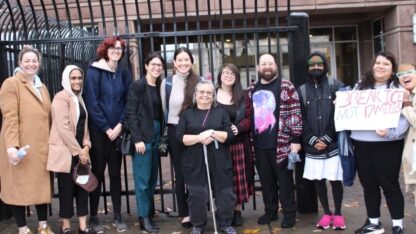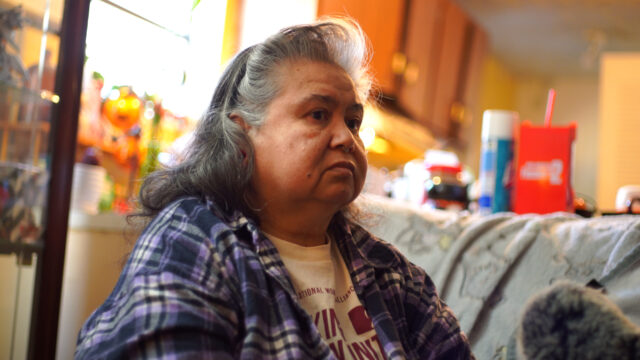
Alma Bowman walked out of the Atlanta Immigration and Customs Enforcement field office on a rainy November day.
She used a cane to make her way toward a cheering group of friends and family, flanked by attorneys as she moved through the tall security gates.
“Right now, I’m overwhelmed. My heart is just going boom boom boom,” she said.
Bowman walked into this office for a regular check-in in March 2025. She was taken without warning to immigration detention at Stewart Detention Center in Lumpkin, Georgia. Then, just before Thanksgiving and again without notice, she was released.
“I’m speechless because when the officer came up to me and said, ‘You want to go home?’ I couldn’t say anything. I just said, ‘Can I give you a hug?’ When she let me give her a hug, I knew it was legit,” Bowman remembered.
She had been in immigration detention before, at the Irwin County Detention Center, where she helped immigrant women report medical abuse they experienced during gynecology appointments. Bowman was released from immigration detention after the reports came out and the detention center lost its contract with ICE to detain immigrants.
For a while, Alma was able to live at home in Macon with her family while wading through her complex citizenship case.
Bowman was born to an American military father and a Filipina mother in the Philippines.
Her attorney, Samantha Hamilton, said the laws at the time granted Bowman U.S. citizenship.
Bowman moved to Georgia when she was 10 and has been here for more than four decades, thinking she was a citizen the entire time. The U.S. government’s argument is Alma does not have a claim to citizenship because they say her father is not her actual father.
Her attorney says she was jailed for writing bad checks in 2013, but she didn’t have any issues with her citizenship come up until she was pulled over during a traffic stop in 2017. That’s when she was sent to immigration detention for the first time.
Bowman said the conditions during her second detention, this time at Stewart Detention Center, were difficult.
“I had to get Sam involved plenty of times to get medication refilled or just to see my provider,” she said.
Hamilton said it’s not uncommon for attorneys to intervene so immigrants can get medical treatment.
“Even with the most basic type of medical attention, like getting prescriptions refilled that facilities are supposed to have just on hand in the back, can be like pulling teeth,” Hamilton said.
CoreCivic, the for-profit prison company that runs Stewart Detention Center, said in a statement detainees have 24/7 access to high-quality health care that meets standards set by both CoreCivic and the federal government. During a summer audit of Stewart’s health services, ICE found no deficiencies.
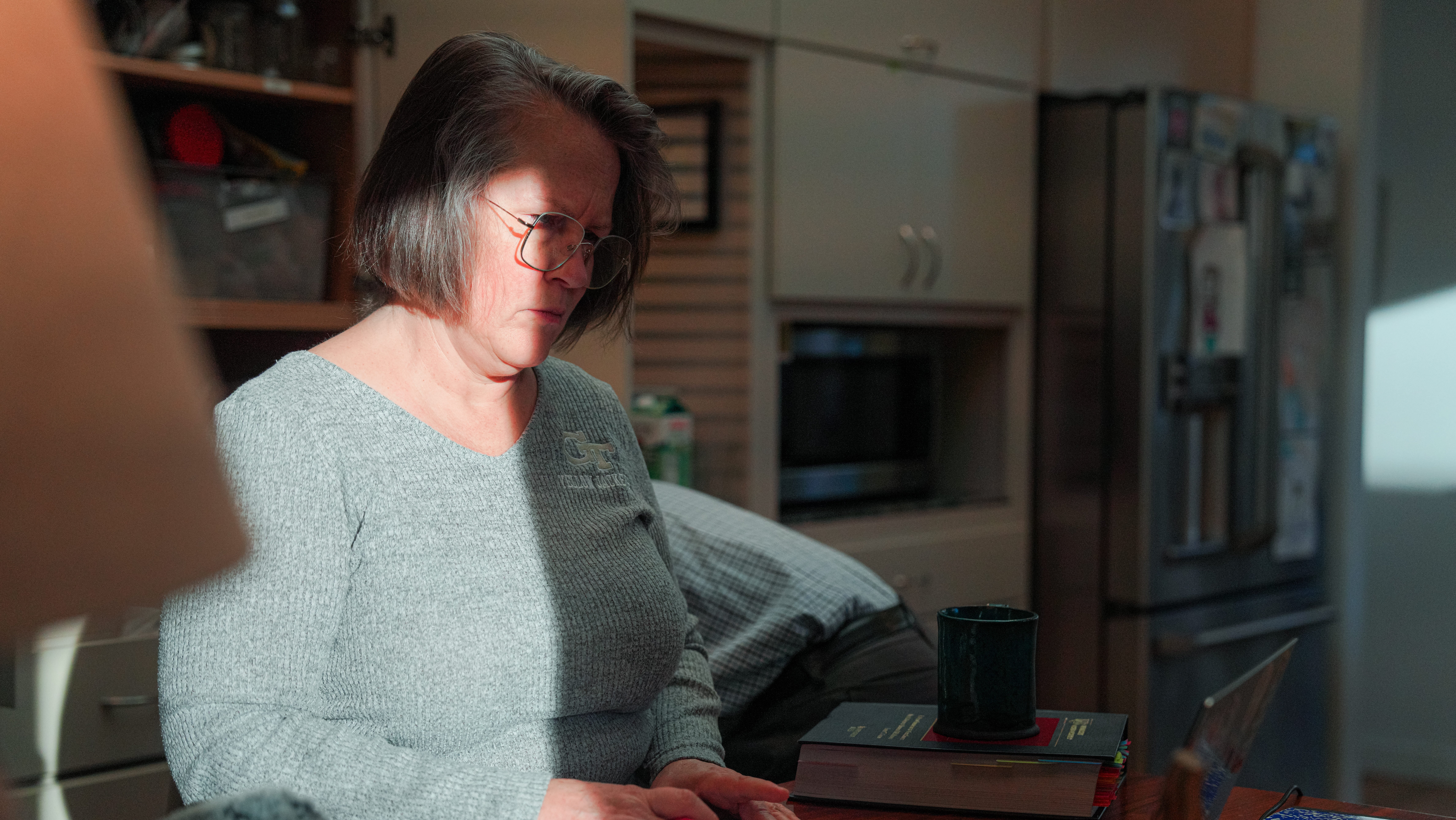
Now that Bowman is home with her kids, she’s advocating for those still in detention while fighting to defend her claim to citizenship.
“I’m still going to fight, fight, fight. I mean, even if I’m here or even if I go back to the Philippines for some odd reason, I’m going to continue fighting,” she said.
She keeps up with people who are still in detention, and people who have been deported and are now overseas.
“You know, everybody there, no matter how old they are, even so much older than I am, they call me mama,” Bowman said. “They know that they can come to me if they need help.”
But in the meantime, she’s looking forward to spending Christmas in-person with her kids, cats and family.
This is part six of the WABE News series “Detained in Georgia,” where we look at one of the largest immigration detention centers in the U.S. to better understand how it affects the community — and the people detained there.