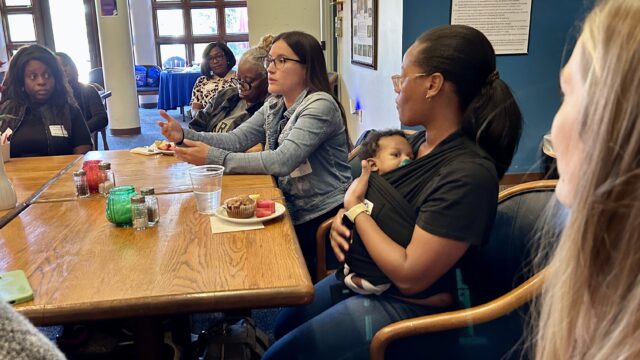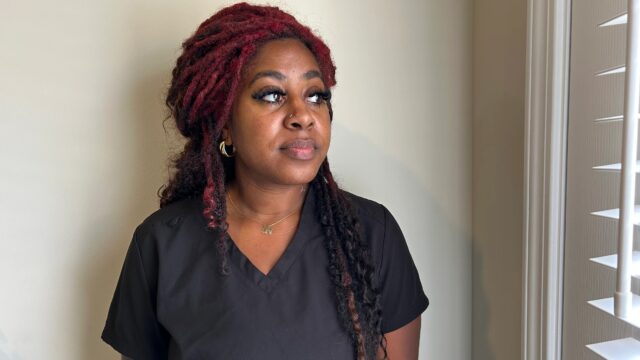
Covington Navy veteran Jenile Jones had a baby a few months ago — a son. It’s been about a decade since she gave birth to her previous child. And this time, she says, it’s been harder to recover from pregnancy and childbirth.
“Last time, I think I coped better because I was younger. It was just more fast-paced, but now I’m actually really feeling it this time around,” Jones says.
Jones has experienced postpartum anxiety this time. Her symptoms prompted her to seek help from a counselor who specializes in working with women military veterans, she says.
“I’m currently talking to a therapist about every week,” Jones says.
Growing need for support
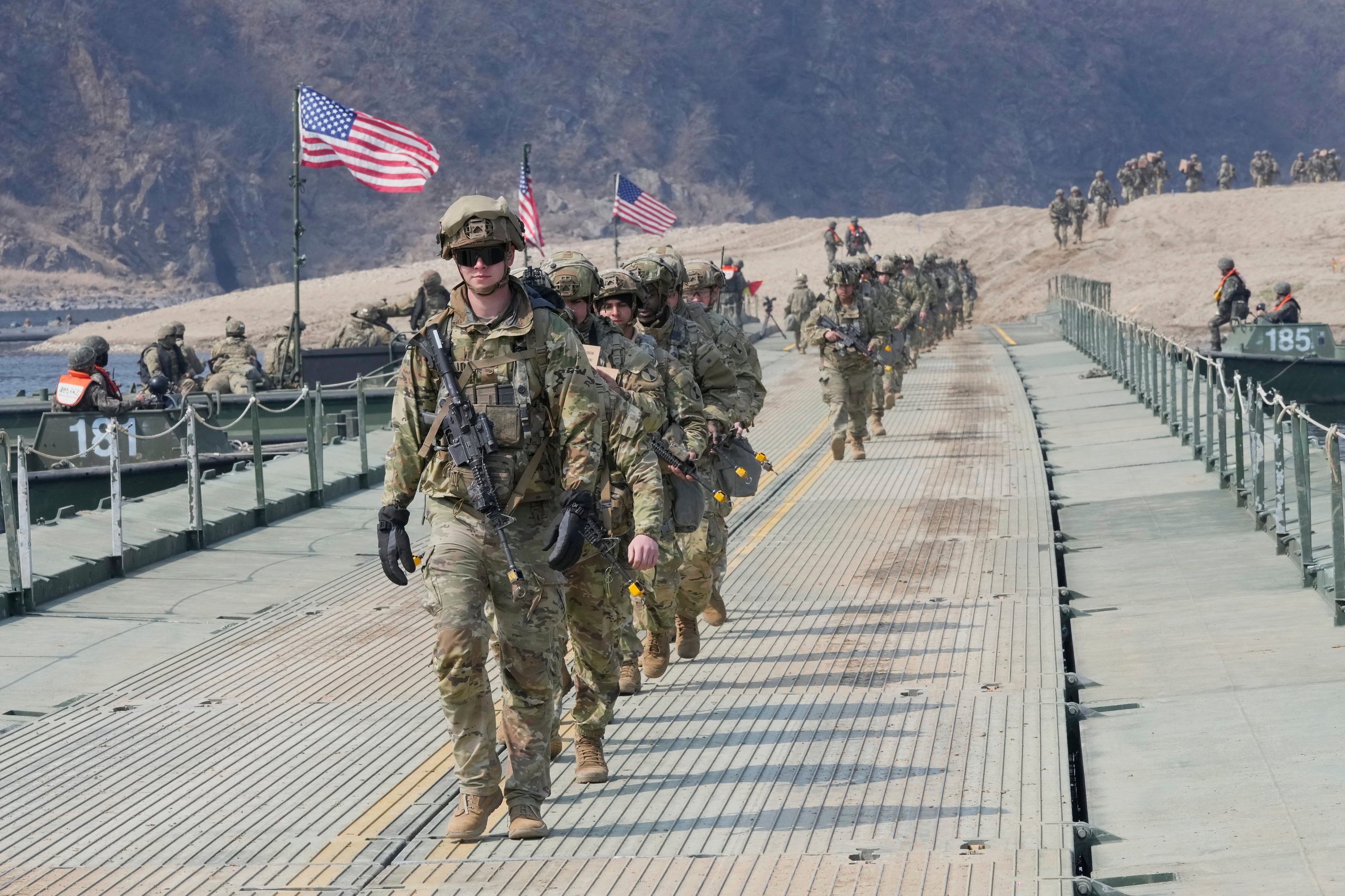
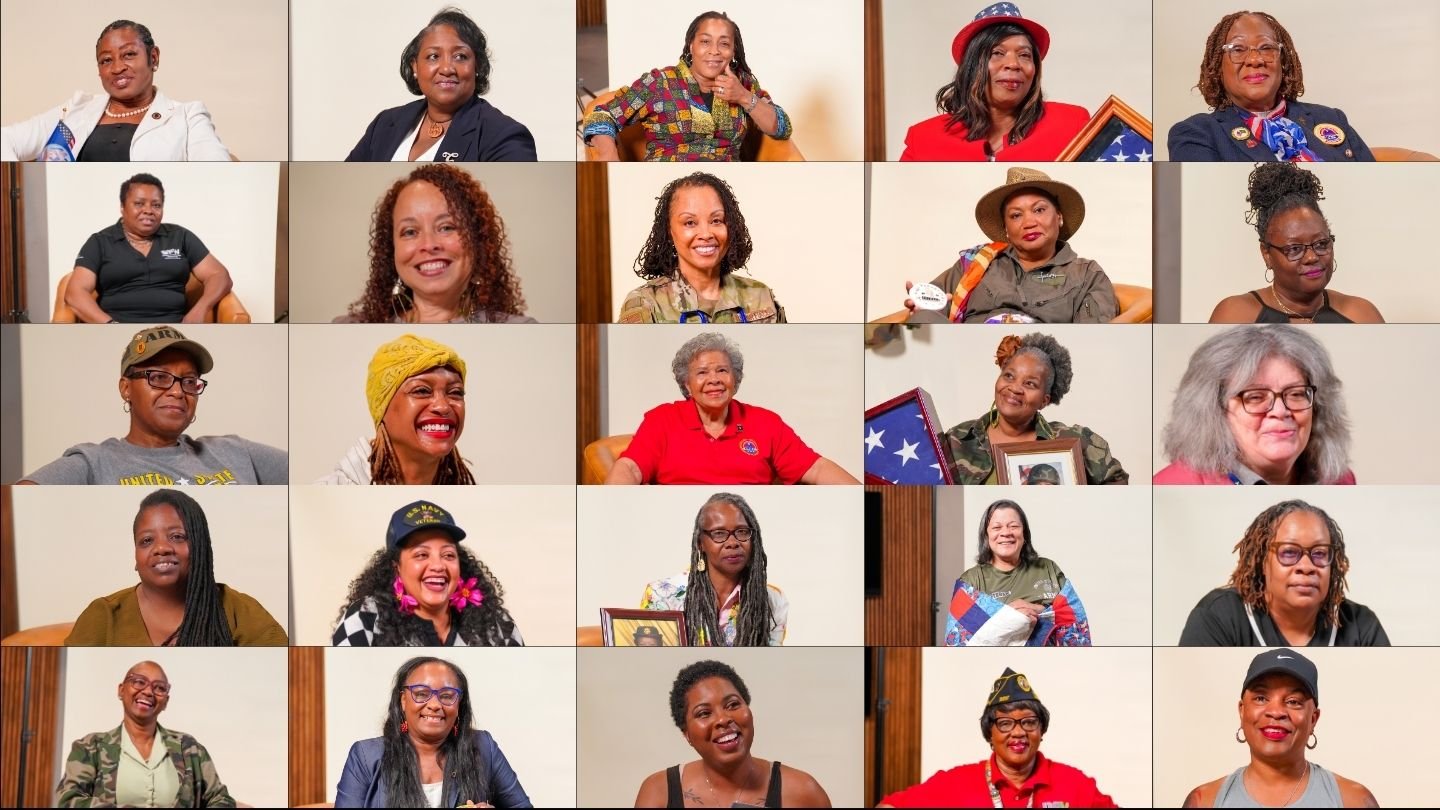
Nationwide, there are more than 2 million women veterans. Women are the fastest-growing group of veterans in the United States. They are expected to make up nearly 20% of the veteran population by 2040, according to the U.S. Department of Veterans Affairs.
Military deployments and combat exposure are linked with physical and mental health conditions, the VA found, including posttraumatic stress disorder or PTSD, which can increase the risk for preeclampsia, gestational diabetes, preterm birth and other pregnancy complications, and substance use.
Women veterans are twice as likely as male veterans to develop PTSD, according to the VA. About 1 in 5 women report experiencing military sexual trauma during their service.
Trauma can exacerbate existing maternal mental health risks associated with pregnancy, including mood disorders, depression, anxiety, PTSD and obsessive-compulsive disorder, says Dr. Emily Hylton, a clinical psychologist with the Atlanta VA Health Care System.
“The risk goes up even further during pregnancy. And, actually, we don’t talk about these quite as much, but the risk for disorders like obsessive compulsive disorder can go up in pregnancy and postpartum, and also manic episodes,” says Hylton. “Sometimes that might be the first time that woman has experienced those symptoms, sometimes it’s an exacerbation of preexisting mental health conditions or symptoms coming back that maybe were successfully treated before. So, that’s what makes that perinatal period so important for mental health treatment.”
Studies also link a history of trauma, including PTSD and adverse childhood experiences, to a risk for certain physical health conditions, including cardiovascular disease.
Risks may be higher in Georgia
Georgia has one of the largest and fastest-growing populations of women veterans in the U.S.
And women veterans who use VA health benefits often get their prenatal care and labor and delivery care through civilian health facilities because the VA health system typically doesn’t provide the services.
Georgia is one of the most dangerous places to be pregnant, federal health data show, especially for Black women, who are nearly three times as likely to die during and after pregnancy as other women in the state, according to the CDC.
The top cause of pregnancy-related deaths in Georgia between 2020 and 2022 was cardiovascular conditions, according to the Georgia Maternal Mortality Review Committee.
In 2022, mental health conditions were the leading cause, a category that includes drug overdoses related to substance-use disorder, suicide, and other deaths related to a mental health condition.
The committee has determined that 87% of all pregnancy-related deaths in Georgia were preventable.
“We’re trending in the wrong way for our women,” says Kathleen O’Loughlin, who heads the Atlanta VA’s Women Veterans Program.
The program coordinates maternity care for more than 500 pregnant and postpartum veterans. The Atlanta VA also launched a Perinatal Mental Health initiative last year to coordinate mental health care and community supports up to a year following a veteran’s pregnancy.
“As the number of women veterans grows, the number of pregnant women veterans that seek care grows, and so does the demand,” O’Loughlin says. “And as we’re seeing those numbers trend upward for the maternal morbidity and mortality issues. And mental health is very high on the list of negative impacts for our pregnant and postpartum veterans.”
Having a dedicated team can be critical to preventing severe pregnancy and postpartum complications, she says.
The Atlanta VA has struggled for years with long wait times for appointments, particularly for a specialist appointment, and unanswered calls, according to a recent VA Office of Inspector General report.
As demand increases, so does uncertainty about cuts
Nationwide in 2025, the Trump administration slashed about 6% of VA staff, including “over 2,700 nurses, over 1,000 medical officers, and more than 1,000 psychologists and social workers, as well as over 1,800 people tasked with evaluating veterans’ claims for benefits,” according to a Center on Budget and Policy Priorities analysis of federal data.
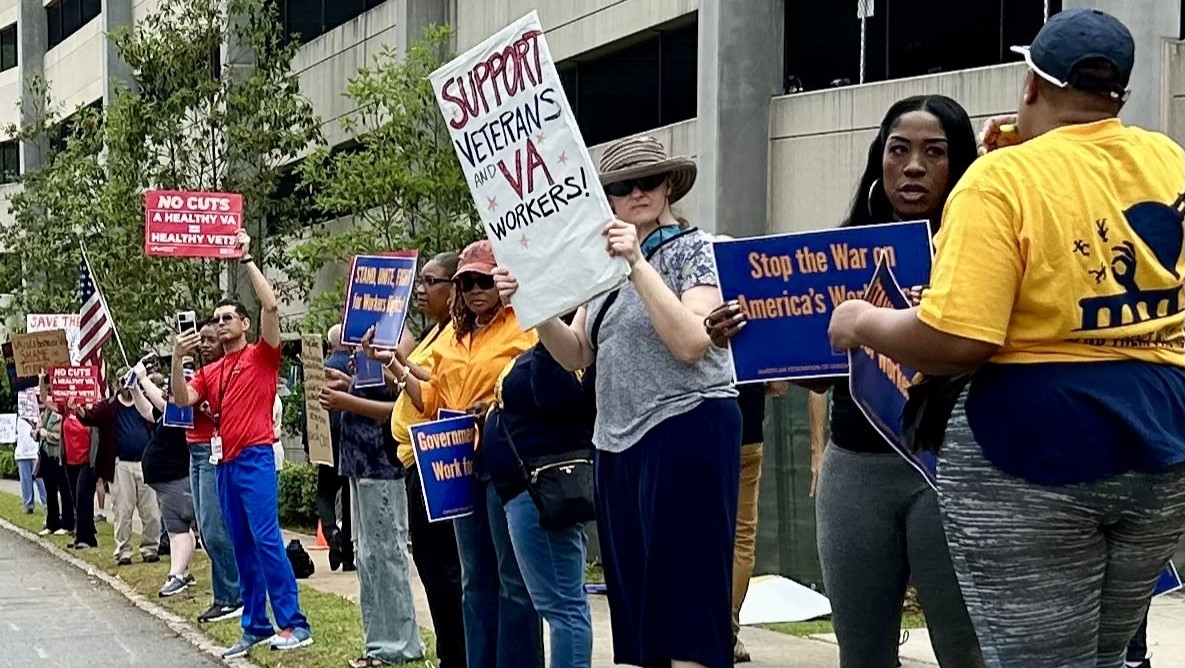
In Georgia, it cut more than 7% of VA staff, including dozens of Atlanta VA employees.
So far, the Atlanta VA’s Women Veterans Program has mostly been spared.
Army veteran and former combat medic Veda Brooks says the support it provides is especially important for vulnerable women veterans.
“It’s huge for postpartum veterans,” says Brooks, who is also the Women and Minority Veterans Coordinator for the Georgia Department of Veterans Service. “And to lower our suicide rate.”
WABE’s news series “Invisible Scars: Women veterans in Georgia search for healing” is part of the Rosalynn Carter Fellowships for Mental Health Journalism