Millions of Americans, including in Georgia, are deeply uncertain about what the future holds for their federally funded healthcare as the Trump administration’s cuts take effect.
Over the next decade, President Donald Trump’s tax and spending plan calls for the federal government to cut hundreds of billions of dollars, including nearly a trillion dollars in Medicaid alone.
Republicans argue they’re eliminating unnecessary costs to preserve care for the most vulnerable.
“When I say to Democrats, ‘What is your plan to rectify this situation?’ they’re like, ‘Well, let’s cut out waste, fraud, and abuse,’’’ said Congressman Rich McCormick in an interview. “Well, what do you think we’re doing?”
Meanwhile, Democrats say the cuts will harm millions to cover tax breaks for the wealthy.
Sen. Jon Ossoff said federal work requirements and higher premiums will restrict access to care.
“There’s going to be less healthcare service available for Georgians,” said Ossoff.
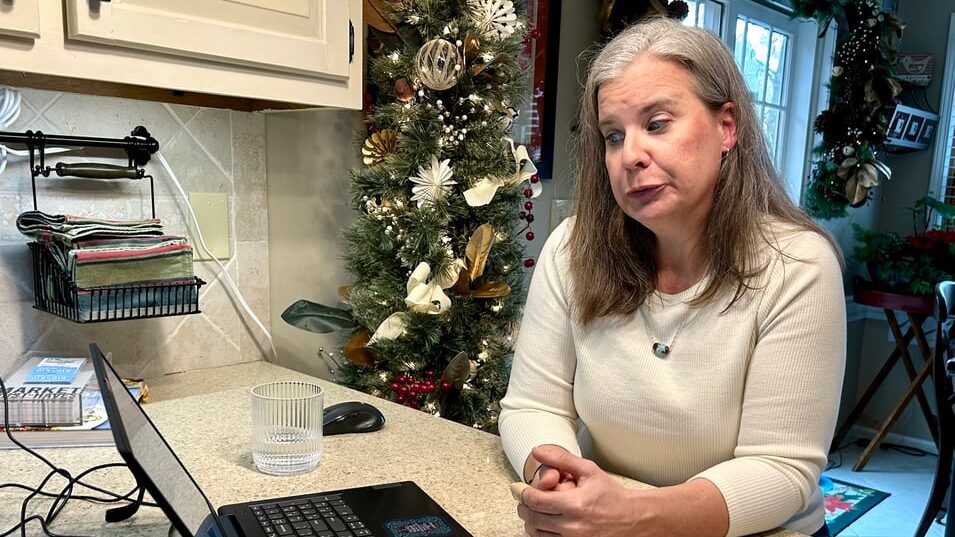
In the middle are individuals like Jackie Reckson and her son, Aaron, trying to make sense of it all.
Aaron was diagnosed with partial agenesis of the corpus callosum as a baby, which is a birth condition that means he never fully developed the part of the brain that communicates between the right and left hemispheres.
His mother says that as a toddler, this meant he was late to develop the ability to walk and talk, but as he got older, the problems were more centered around behavioral and emotional control.
Aaron is now 24 and lives a pretty busy life, working at Brewable, a coffee shop that employs adults with disabilities, competing on a Special Olympics powerlifting team called Big Dog Barbell, and four days a week, he goes to his day program, Bloom.
The cost of Bloom is covered through the state’s Comprehensive Support Waiver Program, provided through the state’s behavioral health agency and funded by a mix of state and federal dollars.
Reckson says the program would be unaffordable if she had to pay out of pocket, costing almost $20,000 annually.
Reckson herself is facing a sharp spike in her health insurance premiums unless enhanced affordable care subsidies are reinstated, and she says the combination would be potentially disastrous.
She said without the day program, Aaron would be left without his primary outlet to socialize and get out of the house, and the alternative of sitting at home all day would take a severe toll on his mental health.
With less money coming into the state for Medicaid overall, state health officials will have to make difficult decisions about where to cut costs, says Laura Colbert, executive director of Georgians for a Healthy Future.
Colbert said Georgia will see a reduction in Medicaid funding of about $8 billion over the next 10 years, meaningfully cutting into the state’s funding for the program.
Frequently, the services that are used the most by people with disabilities and seniors are the first to get cut when Medicaid budgets get tight, because they are often the most costly, according to Colbert.
While funding for Reckson’s son’s program remains in place for now, disability advocates are sounding the alarm that cuts to federal Medicaid funds could put the services at risk.
McCormick says Reckson has nothing to worry about.
“To somebody who’s on Medicaid because they’re disabled, this has nothing to do with you,” said McCormick. “What we did in the ‘big beautiful bill’ or whatever you want to call it, has nothing to do with people like that. What Democrats have done is use fearmongering to make you think that’s what this is about.”
Ossoff says the system is already seeing deep cuts.
“These policies have real human impacts, and the fact the Medicaid was cut by nearly a trillion dollars in order to cut taxes for the wealthiest people in the country, I think, adds insult to the injury,” said Ossoff.
It’s worth noting that the Trump administration’s tax and spending plan includes a provision to create a new waiver program for adults with disabilities starting in 2028, but the existing program already has a years-long waitlist, making it unclear how easily new participants would be able to access services.
Reckson says she had to apply a full seven years before Aaron was even eligible to secure a spot in time for him to have a place to go after leaving high school.
This is part 2 of the WABE News series: “Medical Wealth Gap: Filling the cracks in Atlanta’s safety net.“